
From 2009 to 2018, I worked as a Secondary School Teacher with the Toronto District School Board (TDSB), proudly serving learners in one of the most diverse and multicultural cities in the world. At Newtonbrook Secondary School and William Lyon Mackenzie Collegiate Institute, I taught students from a wide range of backgrounds whose varied experiences, languages, and lived realities enriched our learning environment and shaped my ongoing commitment to inclusive, student-centered education.
My teachable subjects included Science (Biology), Geography, and Mathematics. I taught across academic, applied, gifted, and locally developed course streams, regularly adapting my instruction to meet the varied learning needs of students, including English Language Learners (ELL) and students with Individual Education Plans (IEPs). In addition to my core subjects, I also taught Grade 9 English and Grade 11 Fitness during periods of staffing shortage. These interdisciplinary experiences broadened my instructional repertoire and deepened my capacity to engage students across a wide range of interests and learning profiles.
A significant focus of my work was curriculum design. I created all of my own lesson materials, assessments, and evaluation tools in alignment with the Ontario Ministry of Education curriculum. I regularly shared these resources both within my departments and online via platforms like SlideShare, where my teaching materials ranked among the top 2% of content globally in 2013.

My course designs emphasized inquiry-based learning, student agency, and collaborative knowledge building. At the outset of each semester, I would conduct a live audience-response survey (e.g., using SMART Response clickers) to elicit students’ interests, preferred modes of assessment, and relevant background experiences. These insights informed our shared decisions about the pacing and depth of topics and gave students a sense of ownership over the course direction—particularly valuable in compulsory credit courses. I also administered mid-semester surveys to gather student feedback and make iterative improvements to my teaching as the term unfolded.
To support collaboration and peer review, I integrated a range of digital tools, including Diigo (for social bookmarking and annotation), Creately (for collaborative diagramming), and Google Classroom (for shared editing and communication). These platforms encouraged students to not only consume knowledge, but to actively construct, critique, and refine it through digital artifacts. As the teacher, my role shifted from “content deliverer” to “expert collaborator,” guiding discourse and orchestrating learning in response to students’ evolving ideas.
Beyond the classroom, I was deeply engaged in co-curricular and community-building initiatives. I coached the Junior Boys Soccer and Varsity Boys Baseball teams at W.L. Mackenzie (the latter of which won a regional championship!). I supervised the Environment Club, judged school-wide events such as “The Lyons Roar” speech contest and “Mackenzie Idol,” facilitated the Middle School Science and Engineering Olympiad (MSEO), and served as a TDSB SuperCouncil trip supervisor.
One of the most meaningful initiatives I coordinated was the Youth and Philanthropy Initiative (YPI), a program that empowers students to engage directly in community-based social change. Through experiential learning, students researched local grassroots organizations, developed persuasive presentations, and selected one nonprofit to receive a financial grant on behalf of their class. YPI’s mission, to engage youth in philanthropy through education, resonated deeply with my own values. The program instilled a culture of compassion, agency, and ethical decision-making, and it helped students see themselves as change-makers within their communities. As YPI Coordinator, I facilitated partnerships with local organizations, supported student research, and fostered a classroom culture aligned with YPI’s core values: empowerment, compassion, integrity, inclusivity, and innovation.
I also contributed to professional leadership and teacher development. I led in-school professional development sessions on educational technology and course website design, and delivered four workshops for pre-service teachers focused on classroom applications of Web 2.0 tools. I was featured in the TDSB’s “Future Transformations” video series, which spotlighted innovative teaching practices across the district. In addition, I regularly shared findings from my graduate research on science learning and educational technology, including leading a roundtable session on computer-supported collaborative learning.
These years of classroom teaching continue to shape my philosophy and practice today: that learners thrive when their voices are heard, when their cultural contexts are honoured, and when they are empowered to co-construct knowledge that matters. Whether in schools, universities, or professional settings, I remain committed to pragmatic, research-informed approaches that link theory to practice and action to reflection.


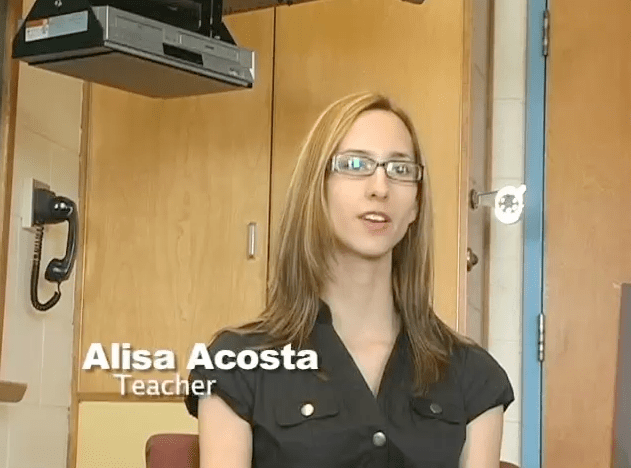


 Alisa Acosta