
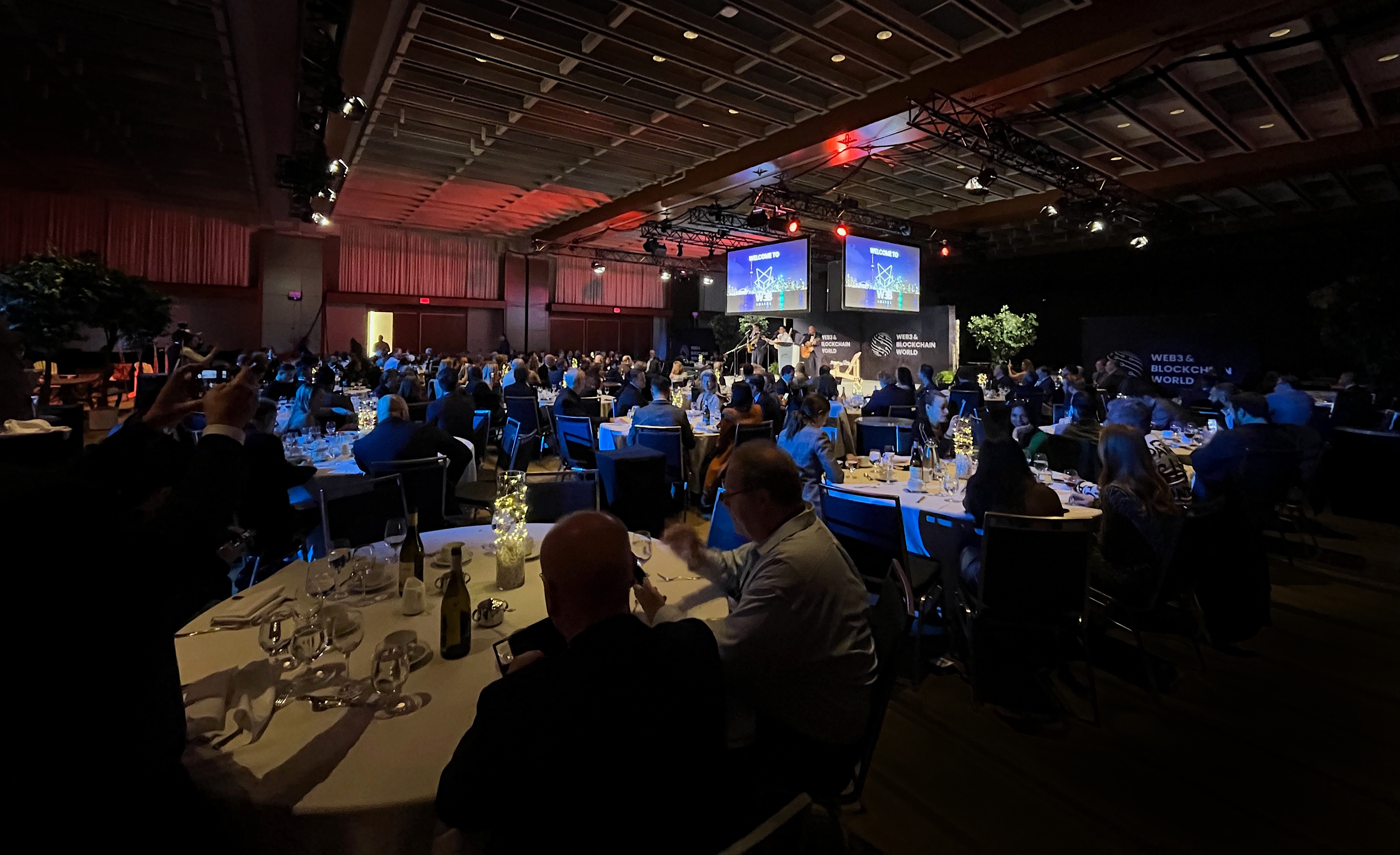
Formerly known as the Enterprise Blockchain Awards, the Web3 & Blockchain Transformation Awards (W3B Awards) celebrate exceptional leaders, researchers, entrepreneurs, and service providers driving global transformation in Web3. Over the years, the W3B Awards have become a recognized platform for honouring innovation and leadership across industries and around the world.
Since 2019, I have overseen every stage of the pipeline, from promoting the call for submissions globally, to developing scoring rubrics and evaluation criteria, managing submission systems, coordinating the judging panel, guiding communications with nominees and finalists, and planning the awards ceremonies themselves. Each year, these efforts resulted in a record-breaking number of submissions, most recently spanning five continents and eighteen countries (from Austria to Vanuatu!). Submissions underwent three rounds of blind judging, with a judging panel led by Dr. Irving Wladawsky-Berger (MIT Sloan, retired IBM executive).
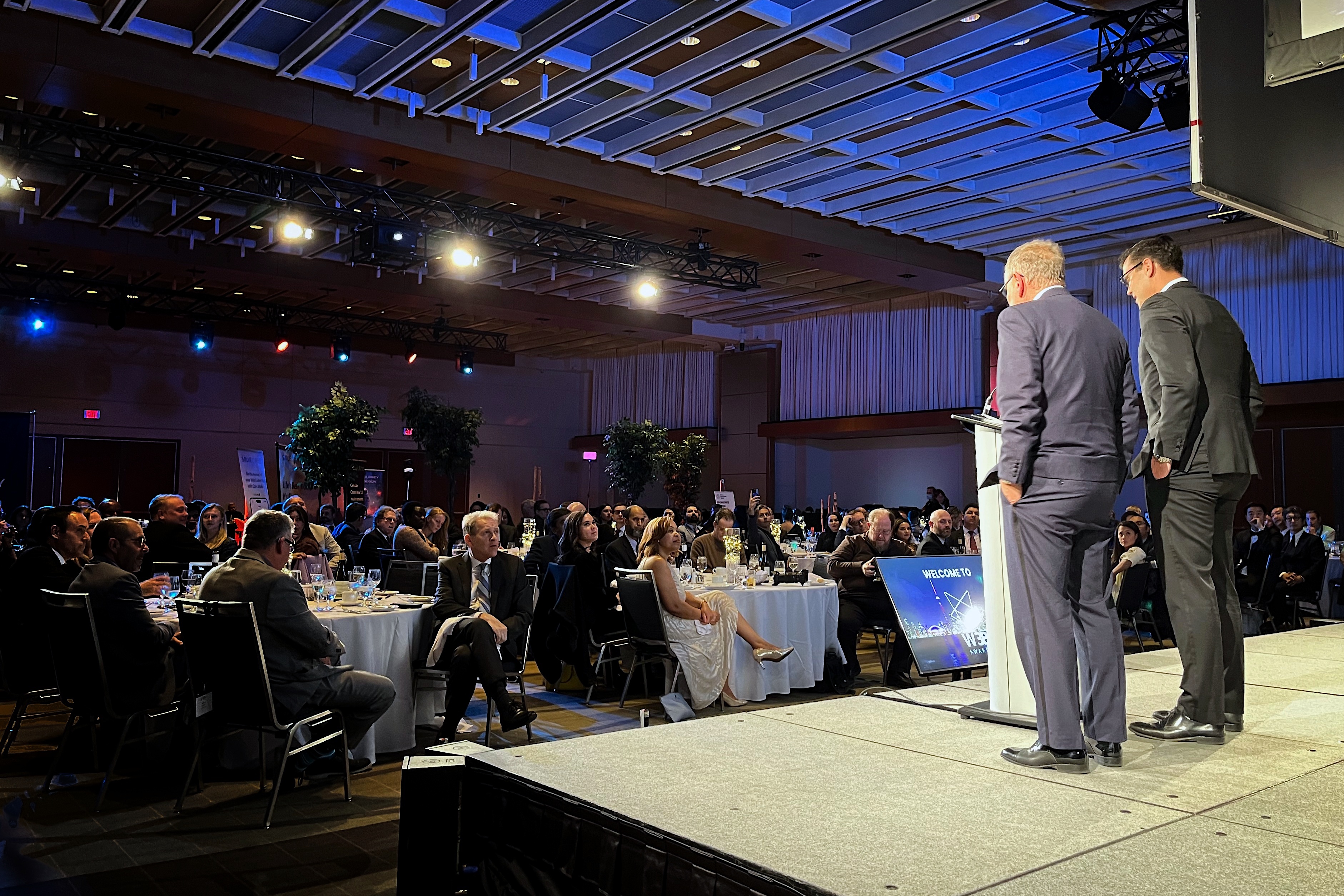
Equally important was ensuring that the achievements of finalists and winners were effectively communicated and celebrated. I created press releases, social media assets, and shareable graphics for nominees, while also shaping the flow of the ceremonies through presenter scripts and run-of-show elements. I supported the transition from an in-person gala to a fully virtual awards ceremony during COVID-19, and then back again to an in-person gala in Toronto. In both formats, I balanced front-of-stage responsibilities, delivering remarks and presenting awards, with behind-the-scenes coordination to ensure each event ran seamlessly.
Another critical dimension of my role was data analysis. I extracted and analyzed submission data to produce visualizations on metrics such as submissions by country, category, and timeline, as well as the share of returning nominees. These insights were not only used in reporting and marketing but also informed strategic decisions about the Awards themselves, for example, establishing new sub-categories within major award areas to better reflect the diversity of submissions. Just as importantly, this analysis surfaced questions of equity and inclusion: Who was participating? Who was being excluded? And how could we make the submission process more accessible and equitable in future iterations?
Through this experience, I gained a deep appreciation for designing processes that balance fairness, clarity, and efficiency, while also creating moments that allow nominees and winners to shine. In many ways, this work built on my earlier career as a teacher, where I designed curricular assessments, developed rubrics, and evaluated student work with the dual goals of rigor and encouragement. Managing the Awards required a similar mindset: building structures that could fairly evaluate a wide range of contributions, while ensuring that the people behind those contributions felt seen and celebrated. The analytics component also connected to my background in designing learning analytics—making invisible processes visible, identifying gaps, and using data to improve systems. Looking forward, I see these skills as highly transferable. The ability to design transparent evaluation frameworks, align diverse stakeholders around shared criteria, and spotlight meaningful outcomes is essential not only in Web3 but also in tackling broader global challenges where structured competitions are used to surface and accelerate solutions with real-world impact (e.g. the XPRIZE model).





 Alisa Acosta